
Osteoporosis is often perceived as an aging-related condition, yet the foundation for strong bones is laid decades earlier. Women in their late 20s and beyond frequently overlook bone health, leading to a silent but preventable decline in bone density.
Much like hidden cracks in a bridge that go unnoticed until structural failure, bone loss progresses silently—only surfacing when the damage is irreversible. Existing fitness apps focus on general wellness but fail to provide a science-backed, habit-forming approach tailored to long-term bone strength.
As the sole UX Designer, I led this 10-week independent project as part of my thesis for a master’s in UX Design. I conducted user research, behavioral analysis, wireframing, and usability testing while collaborating with mentors and healthcare experts.
Despite increased awareness of fitness, many women struggle to sustain regular exercise—especially when the benefits are not immediate. Traditional fitness solutions emphasize short-term results (weight loss, muscle gain) but overlook long-term health markers like bone density. Behavioral barriers such as lack of motivation, time constraints, and knowledge gaps further prevent consistent engagement.
1 in 3 women
over 50 will experience an osteoporosis-related fracture



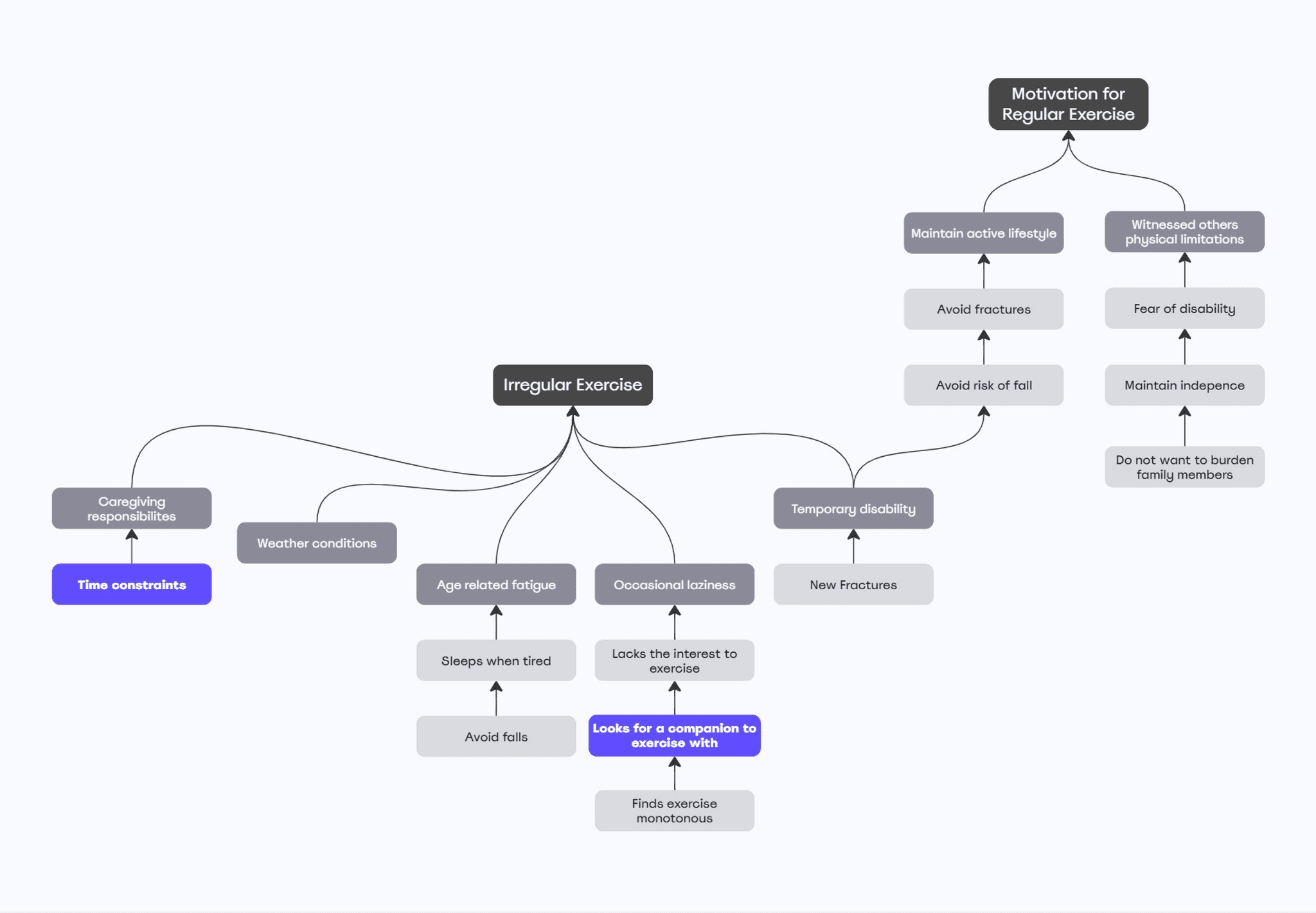
Through in-depth interviews with women aged 27–45, key challenges emerged: feelings of isolation, lack of accountability, and limited awareness about osteoporosis. One participant said, “I know I should exercise, but it’s hard to stay consistent when you don’t feel immediate results.” Others noted that they were unaware bone health should be a concern before menopause.



Despite increased awareness of fitness, many women struggle to sustain regular exercise—especially when the benefits are not immediate. Traditional fitness solutions emphasize short-term results (weight loss, muscle gain) but overlook long-term health markers like bone density. Behavioral barriers such as lack of motivation, time constraints, and knowledge gaps further prevent consistent engagement.
Existing fitness apps focus on general wellness but fail to provide a science-backed, habit-forming approach tailored to long-term bone strength.
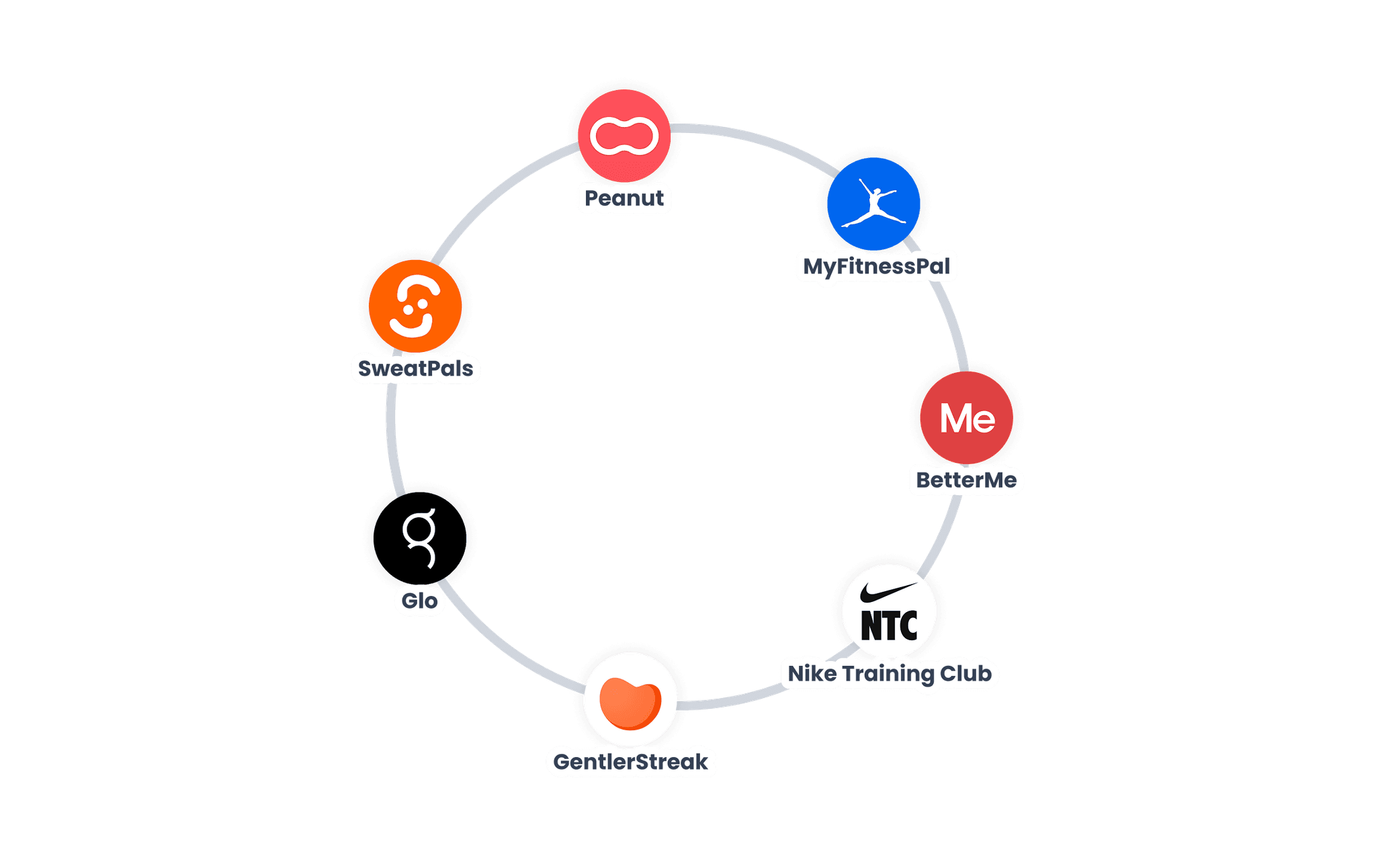
Traditional fitness solutions emphasize short-term results (weight loss, muscle gain) but overlook long-term health markers like bone density. Behavioral barriers such as lack of motivation, time constraints, and knowledge gaps further prevent consistent engagement.
What if fitness wasn’t just about aesthetics but also about future-proofing mobility and independence? By leveraging behavioral design, cycle-aware training, and social reinforcement, we envisioned an engaging digital experience that seamlessly integrates osteoporosis prevention into daily routines.
I designed a mobile-first platform rooted in UX laws and behavioral psychology to foster lasting engagement. Hick’s Law streamlined onboarding with tailored workout plans based on menstrual cycles, energy levels, and lifestyle. Nir Eyal's Hook Model informed micro-motivation nudges, reinforcing both short-term benefits (mood, energy) and long-term bone health. To counteract isolation and boost adherence, the partner matching feature introduced accountability by connecting users for in-person or virtual workouts. Social reinforcement, guided by behavioral commitment principles, drove consistency, while a progress-tracking avatar leveraged gamification to sustain motivation. This user-centered approach transformed exercise into an intuitive and engaging habit.
Higher Engagement: By reframing exercise as a social and cyclical habit, we addressed key drop-off points in fitness journeys.
Sustainable Motivation: Unlike rigid workout programs, adaptive nudging and habit-stacking techniques made fitness feel intuitive rather than burdensome.
Preventive Healthcare Integration: This approach bridges the gap between fitness and medical well-being, reshaping how women prioritize bone health before it’s too late.